
Quick answer: Driveway coatings resist oil and tire stains by creating a dense, impermeable chemical barrier over the concrete. High-quality polyaspartic and polyurea systems prevent automotive fluids and hot rubber from penetrating the porous surface. This ensures spills remain on the top layer, allowing homeowners to wipe them away easily.
Key Takeaways
- Untreated concrete acts like a sponge, allowing engine oil and hot tire plasticizers to seep deep into the surface and cause permanent discoloration.
- Professional Concrete Coatings for Driveways form a seamless, chemical-resistant shield that repels automotive fluids and prevents hot tire pickup.
- Hiring a reputable Driveway Coating Contractor Detroit MI like Polypro Concrete Coatings ensures proper surface preparation and a durable, long-lasting finish.
Concrete driveways take a massive amount of abuse. Every day, heavy vehicles roll over the surface, bringing heat, friction, and potentially leaking fluids. If you own a home, you have likely noticed dark oil spots or stubborn black tire marks ruining the curb appeal of your property. These stains are incredibly difficult to remove with standard pressure washing or over-the-counter cleaning chemicals.
The root of the problem lies in the physical structure of concrete itself. While concrete feels solid to the touch, it is actually full of microscopic pores and capillaries. When you park a car on an untreated driveway, any leaking fluids or heated rubber compounds naturally seep into these tiny voids. Once those materials penetrate the surface, they become locked inside the concrete matrix.
Homeowners are increasingly turning to professional protective systems to solve this issue permanently. By applying a specialized chemical barrier, you can completely change how your driveway interacts with vehicles. This guide explains the exact mechanisms behind hot tire pickup, why oil stains are so stubborn, and how professional coatings provide a definitive solution.
Why do untreated driveways absorb oil and hot tire marks?
To understand how a coating protects a driveway, you must first understand why untreated concrete fails to resist stains. Concrete is essentially a mixture of cement, water, and aggregates like sand and gravel. As the concrete cures and the water evaporates, it leaves behind a network of tiny pores.
The science of oil stains on concrete
Motor oil, transmission fluid, and brake fluid possess low surface tension. When these liquids drip onto an untreated concrete driveway, their low surface tension allows them to spread out and travel downward into the porous concrete structure. Capillary action pulls the oil deeper into the slab.
Once oil sinks below the surface, surface-level cleaning methods become ineffective. Even if you scrub the top layer with degreasers, the oil trapped beneath the surface will slowly wick back up to the top, causing the stain to reappear days or weeks later.
What causes hot tire pickup?
Hot tire pickup is a specific phenomenon that plagues residential driveways. When you drive your car, the friction between the tires and the asphalt road generates significant heat. This heat softens the rubber compounds and the plasticizers inside the tire.
When you pull into your driveway and park, the hot tires press directly against the concrete. As the tires cool down, the rubber contracts and physically grips the pores of the untreated concrete. When you reverse your car the next day, the tires pull away, often leaving behind a dark residue. In some cases, the bond between the tire and the concrete is so strong that it can literally pull up weak spots in the concrete itself.
How do Concrete Coatings for Driveways block stubborn stains?
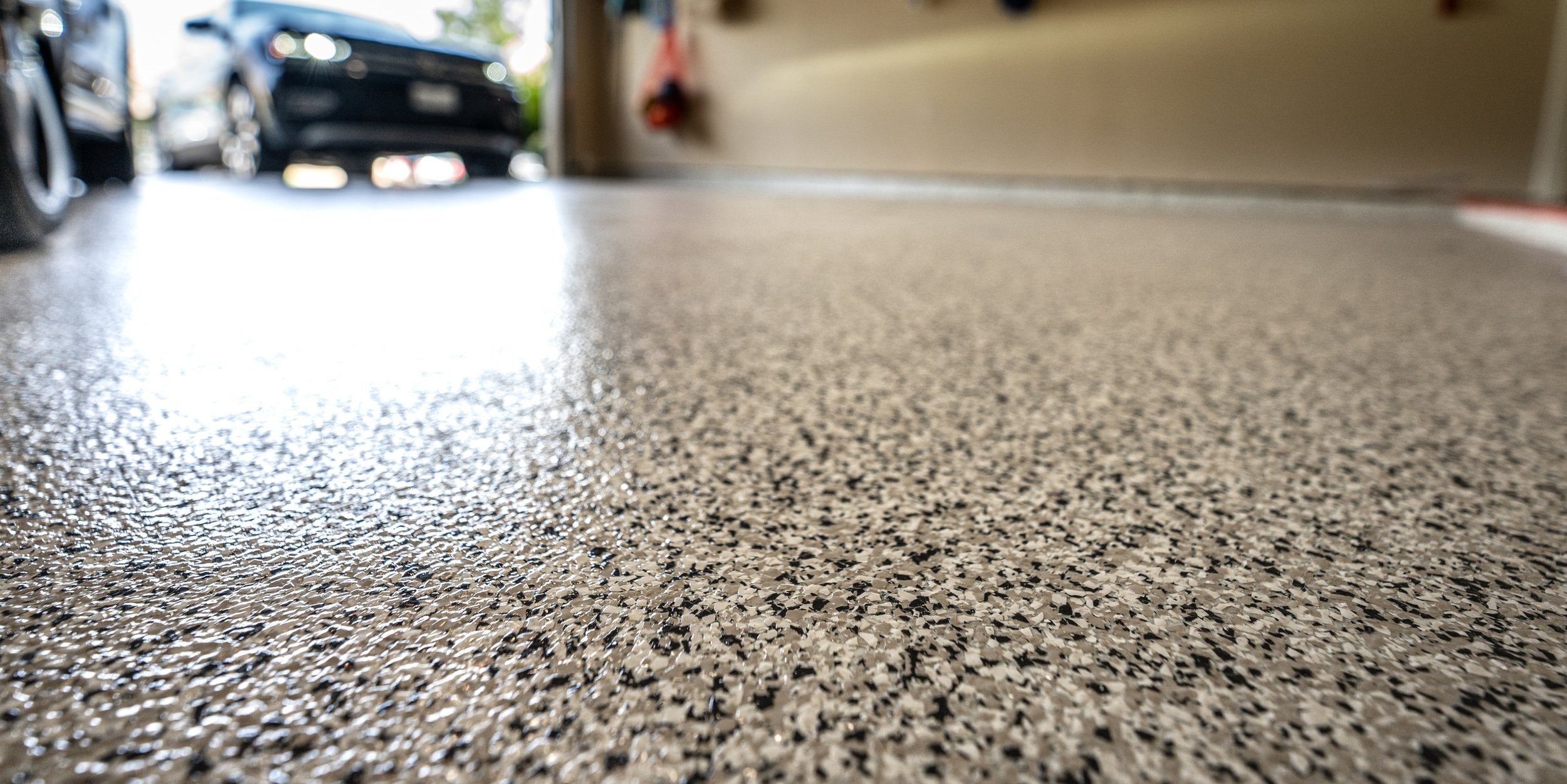
The primary function of a concrete coating is to eliminate the porosity of the surface. When installed correctly, the liquid coating flows into the microscopic pores of the concrete and hardens, creating a permanent, physical anchor. The top layer of the coating cures into a smooth, seamless membrane that completely seals off the concrete below.
Creating an impermeable barrier
High-quality Concrete Coatings for Driveways rely on advanced chemistry, typically involving polyurea or polyaspartic compounds. These materials possess an incredibly high cross-link density. Cross-linking refers to the way the polymer chains bind together as the coating cures.
Because the cross-link density of a polyaspartic coating is so tight, the molecules of motor oil and transmission fluid are physically too large to pass through. Instead of sinking into the driveway, the oil simply pools on the surface of the coating. You can easily wipe up the spill with a paper towel or a mild degreaser without leaving a permanent shadow behind.
Resisting heat and chemical bonds
Polyaspartic coatings also excel at resisting the heat and chemical plasticizers found in modern automotive tires. Unlike cheap DIY acrylic sealers or basic hardware store paints, a polyaspartic system has a high heat tolerance. When a hot tire rests on the coated surface, the coating does not soften, melt, or react with the rubber plasticizers.
Because the coating remains hard and slick, the cooling tire cannot establish a grip on the concrete. When you back out of your driveway, the tire leaves the surface cleanly, completely eliminating the hot tire pickup effect.
What makes Polypro Concrete Coatings the best Driveway Coating Contractor Detroit MI?
Choosing the right material is only half the battle. The durability of a driveway coating relies heavily on the quality of the surface preparation and the skill of the installation team. Applying an industrial-grade polyaspartic coating requires specialized equipment and precise timing.
Rigorous surface preparation
Polypro Concrete Coatings utilizes heavy-duty diamond grinders to prepare the concrete slab. This mechanical grinding process removes the smooth top layer of the concrete, opening up the pores and creating a rough profile. This rough profile is essential because it gives the base coat a textured surface to grab onto. Skipping this step—which many DIY kits and inexperienced contractors do—guarantees that the coating will eventually peel and fail.
Industrial-grade materials
Polypro Concrete Coatings applies multi-layer systems designed specifically for harsh environments. The process begins with a deep-penetrating base coat that wicks into the open pores. Next, the technicians broadcast decorative flakes across the wet base coat, adding texture, color, and slip resistance. Finally, a clear polyaspartic topcoat is applied. This topcoat provides the ultimate defense against UV rays, harsh Detroit winters, road salt, engine oil, and hot tires.
If you value durability and long-term performance, choosing an experienced Driveway Coating Contractor Detroit MI ensures your investment will withstand daily vehicle traffic for years to come.
Secure your driveway against permanent vehicle damage
Your driveway is a significant structural element of your property, and protecting it preserves both its function and your home's curb appeal. Untreated concrete will inevitably fall victim to oil leaks, rust stains, and hot tire marks.
By investing in professional driveway coatings, you establish a permanent defense against automotive fluids and heavy traffic. The seamless polyaspartic barrier repels liquids, prevents rubber adhesion, and makes routine cleaning incredibly simple. Contact Polypro Concrete Coatings today to discuss your project and schedule a professional consultation.
Frequently Asked Questions
Can you apply a driveway coating over existing oil stains?
Yes, but the stains must be properly treated first. A professional contractor will use commercial-grade degreasers and diamond grinding to lift the oil out of the concrete and remove the contaminated top layer. Applying a coating directly over an active oil stain will prevent the coating from bonding, leading to immediate peeling.
How long does a polyaspartic driveway coating take to dry?
Polyaspartic coatings cure much faster than traditional epoxy. In most cases, a professional installation team can complete the entire driveway in one day. You can typically walk on the surface within 4 to 6 hours and park your vehicles on the driveway within 24 to 48 hours, depending on the specific product and ambient temperatures.
Will a coated driveway become slippery when wet?
Professional installers broadcast vinyl flakes into the coating and can mix anti-slip aggregates into the final clear topcoat. This creates a textured surface that provides excellent traction for both foot traffic and vehicle tires, even when it is raining or snowing.
How do I clean a coated driveway?
Maintenance is extremely simple. Because the surface is impermeable, dirt and fluids cannot penetrate. You can clean the driveway using a standard garden hose and a squeegee. For stubborn dirt or fresh oil drips, a mixture of warm water and a mild, pH-neutral soap applied with a soft-bristled deck brush is all you need.